
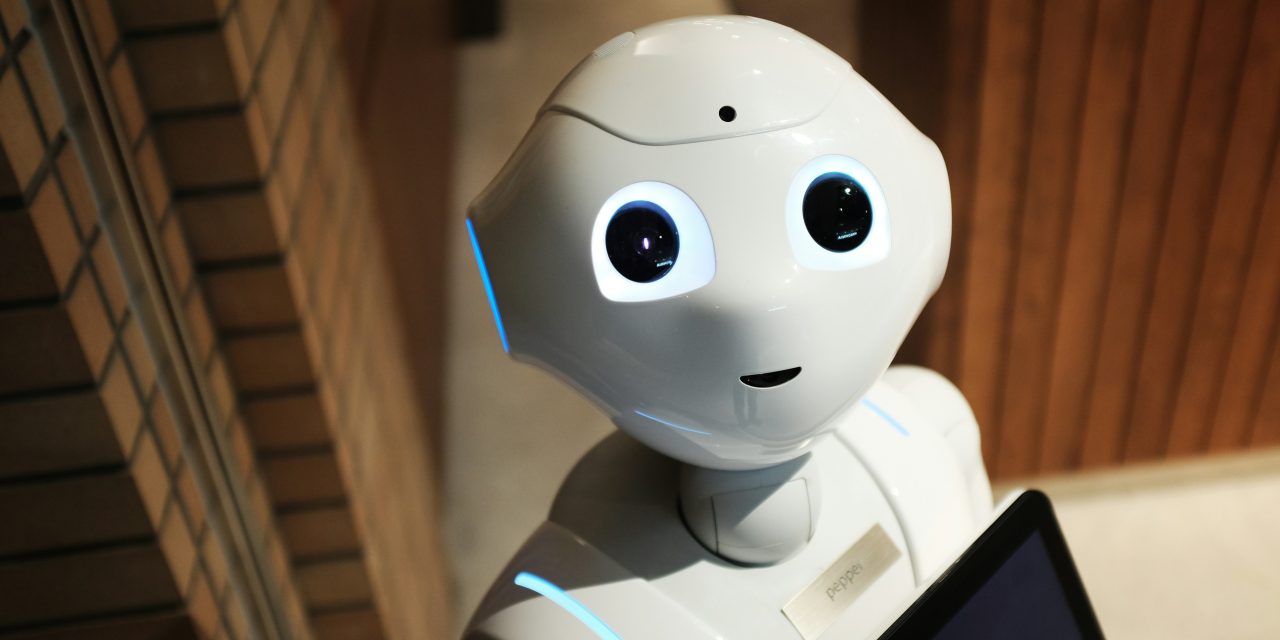
Automation – How many Robots?
For any automation, a number of Robots / Bots/ Execution Engines will be needed to complete the work.
The simple question starts as “How many Robots?” but it is not always a simple capacity calculation.
“If it is a repetitive process, it can be Automated.”
Many business processes have peaks and troughs which are often dealt with by the flexibility of people prioritising different work and some extra effort (i.e. Overtime) when required.
Automation will release people from performing tasks in a business process, but each Robot costs money so there is always pressure to use as few as possible.
This newsletter edition considers factors influencing the number of Robots needed.
- TLDR
- Understanding RPA and its Benefits
- Volume of Transactions
- Complexity of Tasks
- Task Duration
- Peak Load and Variability
- Attended and Unattended Automation
- Security, Segregation and Compliance
- Cyber Considerations
- Is Document Processing Different?
- Will Agentic Automation Change Things?
1. TL;DR
Considering Robot capacity in comparison with the people who currently perform the work, is a good starting point for estimating the number of Robots.
As an implementation grows so that there are more processes being automated, managing the available capacity from the pool of Robots and still meeting the compliance needs of the business becomes more complicated.
Effective new operations will usually include Robots and people working together.
It is often cheaper to have “Spare” Robot capacity than it is to have people diverted from high value tasks to supplement Robot work during periods of peak workload.
By setting appropriate priorities and utilising the whole 24 hour processing period traditional SLAs can often be achieved without excessive Robot capacity being deployed.
Automation is the concept, the labels of RPA, Document Processing and Agentic, do not change the fundamentals.
2. Understanding RPA and its Benefits
Robotic Process Automation (RPA) involves using software Robots, or “bots,” to automate repetitive and rule-based tasks traditionally performed by humans.
The tasks that are suitable for automation can range from data entry and invoice processing to customer service and IT support.
For automation to be effective it requires a reasonable volume of work.
By automating the processes, businesses can achieve several benefits.
Robots can work 24/7 without breaks, significantly increasing the speed and volume of task completion.
Automating routine tasks reduces the need for human effort, leading to substantial cost savings as Robots are cheaper than people.
Robots follow predefined rules and workflows, minimizing errors and ensuring consistent output. Robots do not lose concentration and make human errors.
2.4. Scalability
RPA solutions can be easily scaled up or down based on business needs, providing flexibility in operations. It is easier to buy a Robot or stop using a Robot, compared to the recruitment of a person, or making a person redundant.
3. Volume of Transactions
The volume of transactions is one of the most critical factors in determining the number of Robots required.
High transaction volumes typically necessitate more Robots to ensure timely processing. For instance, a business processing thousands of invoices daily will need more Robots compared to one handling only a few hundred.
In situations where there is more than one type of transaction, the issue of priority can be a consideration. Effective orchestration will be required to get the high priority transactions processed by the available Robots ahead of lower priority work which might have been available earlier.
Queue management and Service Level Agreements become factors that complicate simple volumetric counts.
4. Complexity of Tasks
The complexity of the tasks being automated also plays a significant role. Simple, repetitive tasks like data entry can be handled by fewer Robots, while more complex processes that involve decision-making or multiple steps may require additional Robots.
For example, automating a multi-step process like customer onboarding, which involves data verification, document processing, and account setup, will likely need more Robots than a straightforward task like copying data from one system to another.
The more systems that the Robot has to interact with and the more screens it engages with during the process, the more processing time required. Although the Logon and Logoff tasks can be positioned around a batch of work, the checking a Robot needs to do each time a screen is display is an overhead but one which generates much better quality of outcome than would be achieved with a simple Macro.
5. Task Duration
The time it takes for a Robot to complete a task is another important consideration.
Robots are able to more quickly than people over an extended period. Humans can be quick in the short term, but concentration levels reduce and response times increase when performing repetitive work for hours at a time.
Robots are much more consistent and often limited by the responsiveness of the systems they are interacting with for the process.
If tasks are time-consuming, more Robots may be needed to handle the workload within the desired timeframe. Conversely, if tasks are quick to complete, fewer Robots may suffice.
When multiple Robots are working, orchestrating work between the Robots can minimise elapsed time more effectively when processing durations are short.
Many automations may require a “Human In The Loop” (HILT) to review situations, handle exceptions and as an overview control. This can result in “Long Running” tasks depending on the availability of people to complete their activities.
6. Peak Load and Variability
Businesses often experience peak periods where transaction volumes spike. During these times, additional Robots may be required to manage the increased workload.
It’s essential to consider these peak loads when planning the number of Robots to ensure smooth operations without delays.
There will be a balance to be determined by management on whether it is best to invest in more Robot capacity to meet peak loads and leave the Robots operating at below peak capacity at other times; or use staff to supplement the Robots during the peak periods.
7. Attended and Unattended Automation
RPA can be categorized into attended and unattended automation.
Attended Robots work alongside humans and are triggered by user actions. They typically operate on the same PC as the person is working on. Note: that can give challenges for human actions while the Robot is working.
Attended Robots only work when a person is working (e.g. 8 hours a day, 5 days a week).
Unattended Robots operate independently and can run tasks without human intervention. Typically, such activity is controlled through scheduling and the use of work queues.
Unattended Robots can handle tasks continuously, potentially working 24 hours a day, 7 days a week.
The choice between attended and unattended automation will influence the number of Robots needed.
Each unattended Robot has the processing capacity of 4.2 attended Robots, based on a simple hours available ratio (24 x 7 = 168 : 40. Equivalent to 4.2 : 1).
8. Security, Segregation and Compliance
The way a business puts trust in people performing tasks can be different to the way trust is considered for Robots performing tasks.
Robots are really good at consistency, which allows effective audit trails of activity and log files to be created.
One of the advantages of automation with Robots is that can be used to perform a variety of tasks. Each Robot will perform one task at a time but over a period, it can switch from one task to another.
When a Robot is executing it will need the security permissions necessary to perform the tasks. A different task may require different permissions.
With people there is a need for segregation of responsibilities and similar logic must be implemented for Robots.
The segregation might mean some loss of capacity in overall work orchestration across a pool of Robots.
By implementing an appropriate architecture for Robot privileges and usage, compliance requirements can be met.
For Robots to operate continuously, consideration is required for resilience during situations such as server re-starts.
9. Cyber Considerations
With the growing threat from Cyber attacks, it is important for Robots not to be compromised or to provider a hacker with the ability compromise other systems.
Each time a Robot is started it will need to obtain credentials. One of the advantages of Robots is that they can work with long password strings and the values can be changed frequently.
Robots can be useful in the automation of a Cyber defence, for example by automating the shutdown of servers and processes. It can reduce the need for manual work during a time critical situation.
10. Is Document Processing different?
Although the language used in this newsletter is for Robots and therefore associated with RPA, the points made apply equally to other forms of automation such as document processing.
A document will be a discrete object but for any automation a processing engine will be used. Although is not the traditional term, the activity is the same as a Robot activity.
11. Will Agentic Automation change things?
Agentic automation is the flavour of the marketing at present.
Fundamentally, the combination of AI capability with automation activity does not change the overall approach.
The addition, of AI probably increases the need to consider security, segregation and compliance.
From some perspectives the term “Agent” makes it easier to comprehend the automation of manual work currently carried out by a person, to work performed a computer “Agent”.
Businesses already have people with job titles such as “Customer Services Agent”, so it is a small mental step to see those becoming “Computer Agents”.
Manager’s Guide to Automation: https://www.ether-solutions.co.uk/managers-guide-to-automation-using-software-robots/
#businessbeyondautomation
Article Author
David Martin
Managing Director, Ether Solutions
https://www.ether-solutions.co.uk/